Buy auto-aufkleber.eu ?
We are moving the project
auto-aufkleber.eu .
Are you interested in purchasing the domain
auto-aufkleber.eu ?
domain@kv-gmbh.de · 0541-91531010
Buy auto-aufkleber.eu ?
What is the CPU cache ratio and the CPU cache voltage?
The CPU cache ratio is the ratio between the CPU core frequency and the CPU cache frequency. It determines how fast the CPU cache operates in relation to the CPU core. The CPU cache voltage, on the other hand, is the voltage supplied to the CPU cache to ensure stable and efficient operation. It is important to find the right balance between the CPU cache ratio and voltage to optimize performance and minimize power consumption. **
What does the cache mean in processors, for example 6MB cache?
The cache in processors refers to a small amount of high-speed memory that is used to store frequently accessed data and instructions. When a processor needs to access data, it first checks the cache to see if the data is already there, which can significantly speed up processing time. The size of the cache, such as 6MB, refers to the amount of data that can be stored in the cache at one time. A larger cache size generally means that the processor can store more data and instructions, which can lead to improved performance and faster processing speeds. **

Similar search terms for Cache
Top-Angebote
Products related to Cache:
-
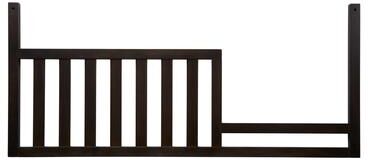
Baby Cache Deux Remi Toddler Guard RailWhen your child grows out of the crib, but not yet ready for a big bed, this toddler Guardrail is a safe and easy way to convert your Crib into a toddler bed. The Deux Remi Crib grows with your child making it the ultimate safe place for your toddler.89,99 $*Shipping: 0,00 $Secure redirect to the provider
-
Intel Core Ultra 5 225F 10-Core Processor, Up to 4.9GHz, 20MB Smart Cache, No Integrated Graphics, LGA 1851 - BX80768225FIntel Core Ultra 5 225F LGA 1851 Processor The Intel Core Ultra 5 225F LGA 1851 Processor is a cutting-edge computing solution tailored for content creators and professionals seeking top-tier performance. Operating at a base clock speed of 2.70 GHz and capable of turbo speeds up to 4.90 GHz, this processor delivers robust power and responsiveness for demanding tasks. With 20 MB of Smart Prefetch Cache, it optimises data retrieval and improves multitasking efficiency, ensuring seamless workflows.178,49 £*Shipping: 0,00 £Secure redirect to the provider
-
Inspire Curations WhovilleFest Christmas Wall Stickers Fun Grinch Inspired Holiday Vinyl Decals WhovilleFest Christmas Wall Stickers Fun Grinch Inspired Holiday Vinyl DecalsTurn your home into a playful holiday wonderland straight out of Whoville. The WhovilleFest Christmas wall stickers bring bold colors, quirky characters, and festive charm to any room, instantly creating a fun and lively Christmas vibe. Designed...63,00 $*Shipping: 0,00 $Secure redirect to the provider




-
What does cache mean?
Cache refers to a hardware or software component that stores data temporarily to speed up future access to that data. It helps improve the performance and efficiency of a system by reducing the time it takes to retrieve information. Caches are commonly used in computer systems, web browsers, and mobile devices to store frequently accessed data for quick retrieval. **
-
What is the difference between a DRAM cache and an SLC cache?
A DRAM cache is a type of volatile memory that is used to temporarily store frequently accessed data for quick access by the CPU. It is faster than SLC (Single-Level Cell) cache and provides better performance for read and write operations. On the other hand, an SLC cache is a type of non-volatile memory that is used to temporarily store data before it is written to the main storage device. It is slower than DRAM cache but provides better endurance and reliability due to its single-bit storage per cell. In summary, the main difference between the two lies in their speed, volatility, and storage technology. **
-
How is "cache" pronounced correctly?
The word "cache" is pronounced as "cash." It is a one-syllable word with a silent "e" at the end. The emphasis is on the "a" sound, making it sound like "cash" without the "sh" sound at the end. **
-
How is "Cache" pronounced correctly?
"Cache" is pronounced as "cash." The "c" is pronounced as a soft "sh" sound, similar to the word "cash." **


What is the Snapchat cache?
The Snapchat cache is a temporary storage location on your device where the app stores certain data to help it load faster and perform better. This can include things like images, videos, and other media files that you have viewed or sent on the app. Clearing the Snapchat cache can help free up storage space on your device and resolve certain performance issues with the app. **
What is the CPU cache?
The CPU cache is a small, high-speed memory that stores frequently accessed data and instructions. It is located directly on the CPU chip and is used to speed up data access and execution by providing quick access to frequently used information. The cache helps to reduce the time it takes for the CPU to retrieve data from the main memory, improving overall system performance. There are typically multiple levels of cache, with each level being larger and slower than the previous one. **
Top-Angebote
Products related to Cache:
-
Baby Cache Glendale Toddler Guard RailWhen your child grows out of the crib, but not yet ready for a big bed, this toddler Guardrail is a safe and easy way to convert your Crib into a toddler bed. The Glendale Crib grows with your child making it the ultimate safe place for your toddler.112,99 $*Shipping: 0,00 $Secure redirect to the provider
-
Baby Cache Deux Remi Toddler Guard RailWhen your child grows out of the crib, but not yet ready for a big bed, this toddler Guardrail is a safe and easy way to convert your Crib into a toddler bed. The Deux Remi Crib grows with your child making it the ultimate safe place for your toddler.89,99 $*Shipping: 0,00 $Secure redirect to the provider
-
Intel Core Ultra 5 225F 10-Core Processor, Up to 4.9GHz, 20MB Smart Cache, No Integrated Graphics, LGA 1851 - BX80768225FIntel Core Ultra 5 225F LGA 1851 Processor The Intel Core Ultra 5 225F LGA 1851 Processor is a cutting-edge computing solution tailored for content creators and professionals seeking top-tier performance. Operating at a base clock speed of 2.70 GHz and capable of turbo speeds up to 4.90 GHz, this processor delivers robust power and responsiveness for demanding tasks. With 20 MB of Smart Prefetch Cache, it optimises data retrieval and improves multitasking efficiency, ensuring seamless workflows.178,49 £*Shipping: 0,00 £Secure redirect to the provider
-
What is the CPU cache ratio and the CPU cache voltage?
The CPU cache ratio is the ratio between the CPU core frequency and the CPU cache frequency. It determines how fast the CPU cache operates in relation to the CPU core. The CPU cache voltage, on the other hand, is the voltage supplied to the CPU cache to ensure stable and efficient operation. It is important to find the right balance between the CPU cache ratio and voltage to optimize performance and minimize power consumption. **
-
What does the cache mean in processors, for example 6MB cache?
The cache in processors refers to a small amount of high-speed memory that is used to store frequently accessed data and instructions. When a processor needs to access data, it first checks the cache to see if the data is already there, which can significantly speed up processing time. The size of the cache, such as 6MB, refers to the amount of data that can be stored in the cache at one time. A larger cache size generally means that the processor can store more data and instructions, which can lead to improved performance and faster processing speeds. **
-
What does cache mean?
Cache refers to a hardware or software component that stores data temporarily to speed up future access to that data. It helps improve the performance and efficiency of a system by reducing the time it takes to retrieve information. Caches are commonly used in computer systems, web browsers, and mobile devices to store frequently accessed data for quick retrieval. **
-
What is the difference between a DRAM cache and an SLC cache?
A DRAM cache is a type of volatile memory that is used to temporarily store frequently accessed data for quick access by the CPU. It is faster than SLC (Single-Level Cell) cache and provides better performance for read and write operations. On the other hand, an SLC cache is a type of non-volatile memory that is used to temporarily store data before it is written to the main storage device. It is slower than DRAM cache but provides better endurance and reliability due to its single-bit storage per cell. In summary, the main difference between the two lies in their speed, volatility, and storage technology. **
Similar search terms for Cache
-
Inspire Curations WhovilleFest Christmas Wall Stickers Fun Grinch Inspired Holiday Vinyl Decals WhovilleFest Christmas Wall Stickers Fun Grinch Inspired Holiday Vinyl DecalsTurn your home into a playful holiday wonderland straight out of Whoville. The WhovilleFest Christmas wall stickers bring bold colors, quirky characters, and festive charm to any room, instantly creating a fun and lively Christmas vibe. Designed...63,00 $*Shipping: 0,00 $Secure redirect to the provider
-
Intel Core i5-14600KF Desktop Processor 14-Core (6P+8E) 20 Threads up to 5.3GHz LGA1700 24MB Cache - No Integrated GraphicsDescription The Intel Core i5 14600KF is a high-performance desktop processor designed for gaming, content creation, multitasking and demanding applications. With 14 cores and 20 threads, it delivers strong processing performance for modern desktop systems. The processor combines 6 Performance-cores with 8 Efficient-cores and can reach a maximum turbo frequency of up to 5.3GHz. With 24MB of Intel Smart Cache, it provides fast and responsive performance across gaming and demanding workloads. The Core i5 14600KF supports DDR4 and DDR5 memory and uses the LGA1700 socket. It is an unlocked processor, giving users additional flexibility for performance tuning with compatible hardware. As an Intel F-series processor, the 14600KF does not include integrated graphics and requires a dedicated graphics card for display output.282,99 £*Shipping: 0,00 £Secure redirect to the provider
-
Intel Core i7-12700KF processor 25 MB Smart CacheIntel® Virtualization Technology for Directed I/O (VT-d)Intel® Virtualization Technology for Directed I/O (VT-d) continues from the existing support for IA-32 (VT-x) and Itanium® processor (VT-i) virtualization adding new support for I/O-device virtualization. Intel VT-d can help end users improve security and reliability of the systems and also improve performance of I/O devices in virtualized environments.Intel® Virtualization Technology (VT-x)Intel® Virtualization Technology (VT-x) allows one hardware platform to function as multiple “virtual” platforms. It offers improved manageability by limiting downtime and maintaining productivity by isolating computing activities into separate partitions.Intel® 64Intel® 64 architecture delivers 64-bit computing on server, workstation, desktop and mobile platforms when combined with supporting software.¹ Intel 64 architecture improves performance by allowing systems to address more than 4 GB of both virtual and physical memory.CacheCPU Cache is an area of fast memory located on the processor. Intel® Smart Cache refers to the architecture that allows all cores to dynamically share access to the last level cache.Intel® AES New InstructionsIntel® AES New Instructions (Intel® AES-NI) are a set of instructions that enable fast and secure data encryption and decryption. AES-NI are valuable for a wide range of cryptographic applications, for example: applications that perform bulk encryption/decryption, authentication, random number generation, and authenticated encryption.Idle StatesIdle States (C-states) are used to save power when the processor is idle. C0 is the operational state, meaning that the CPU is doing useful work. C1 is the first idle state, C2 the second, and so on, where more power saving actions are taken for numerically higher C-states.Intel® Turbo Boost TechnologyIntel® Turbo Boost Technology dynamically increases the processor's frequency as needed by taking advantage of thermal and power headroom to give you a burst of speed when you need it, and increased energy efficiency when you don’t.Max Turbo FrequencyMax Turbo Frequency is the maximum single-core frequency at which the processor is capable of operating using Intel® Turbo Boost Technology and, if present, Intel® Turbo Boost Max Technology 3.0 and Intel® Thermal Velocity Boost. Frequency is typically measured in gigahertz (GHz), or billion cycles per second.Execute Disable BitExecute Disable Bit is a hardware-based security feature that can reduce exposure to viruses and malicious-code attacks and prevent harmful software from executing and propagating on the server or network.Intel® Hyper-Threading TechnologyIntel® Hyper-Threading Technology (Intel® HT Technology) delivers two processing threads per physical core. Highly threaded applications can get more work done in parallel, completing tasks sooner.Instruction SetAn instruction set refers to the basic set of commands and instructions that a microprocessor understands and can carry...258,99 £*Shipping: 0,00 £Secure redirect to the provider
-
How is "cache" pronounced correctly?
The word "cache" is pronounced as "cash." It is a one-syllable word with a silent "e" at the end. The emphasis is on the "a" sound, making it sound like "cash" without the "sh" sound at the end. **
-
How is "Cache" pronounced correctly?
"Cache" is pronounced as "cash." The "c" is pronounced as a soft "sh" sound, similar to the word "cash." **
-
What is the Snapchat cache?
The Snapchat cache is a temporary storage location on your device where the app stores certain data to help it load faster and perform better. This can include things like images, videos, and other media files that you have viewed or sent on the app. Clearing the Snapchat cache can help free up storage space on your device and resolve certain performance issues with the app. **
-
What is the CPU cache?
The CPU cache is a small, high-speed memory that stores frequently accessed data and instructions. It is located directly on the CPU chip and is used to speed up data access and execution by providing quick access to frequently used information. The cache helps to reduce the time it takes for the CPU to retrieve data from the main memory, improving overall system performance. There are typically multiple levels of cache, with each level being larger and slower than the previous one. **
* All prices are inclusive of VAT and, if applicable, plus shipping costs. The offer information is based on the details provided by the respective shop and is updated through automated processes. Real-time updates do not occur, so deviations can occur in individual cases. ** Note: Parts of this content were created by AI.